
By Nancy V. Piñeiro* for Territorio de Ideas, expanded and adapted from this post. / Photo: Martín Álvarez Mullally
Climate-related discourse, like any other type, has concrete consequences and implications.
Given that English is the dominant language in the global circulation of knowledge, translating climate-related discourse without critical engagement (for example, via AI/MT or with insufficient knowledge of the topic) may result in an equally dominant rendering of concepts into other languages, one that is oblivious to the target culture and its politics. How do we detect them? Well, translators specialize and research relevant materials. Some of us have even chosen to pursue careers (together with translation) related to topics of our interest. Translators are diverse professionals!
Probably, the first reaction of translators and other readers alike is, ‘so what? I can’t change the original!’. Indeed, the prevailing perception (and perhaps, practice) is that texts are received and regurgitated into the target language, with no other process or communication in between. Granted, in the real world of translation there is a wide range of professional situations and settings, client-translator relationships, and most often than not our role is limited to a practice captured by the endlessly used bridge metaphor. It is precisely this reality that more translation scholars would do well to familiarize themselves with to avoid overly romantic portrayals of our profession. As a dear mentor used to say when we discussed dire working conditions, exclusion from academic spaces, among other problems, ‘In Argentina, we English-Spanish translators are the proletarians of translation’.
For these reasons, I am not suggesting practicing translators should do what they cannot, but at the same time we should not underestimate what is possible for them, given their knowledge, motivations, skills, and desires. Human translators trained in the discourse and debates of their specialization, in this case climate and the environment, can and do read critically. They can talk to authors/clients when necessary, and discuss whether a term or idea needs an adaptation or even rejection, indeed, whether intercultural and “interpolitical” translation needs to take place. Translators fulfill diverse roles. For example, some of us work with organizations whose values and goals are aligned with ours, and therefore we may become linguistic consultants, because they trust us with that critical reading that only humans can perform. We have different textual strategies to deal with a wide range of decisions. In many cases, due to our wider access to English language materials and greater speed at processing them, we also perform research or editorial duties.
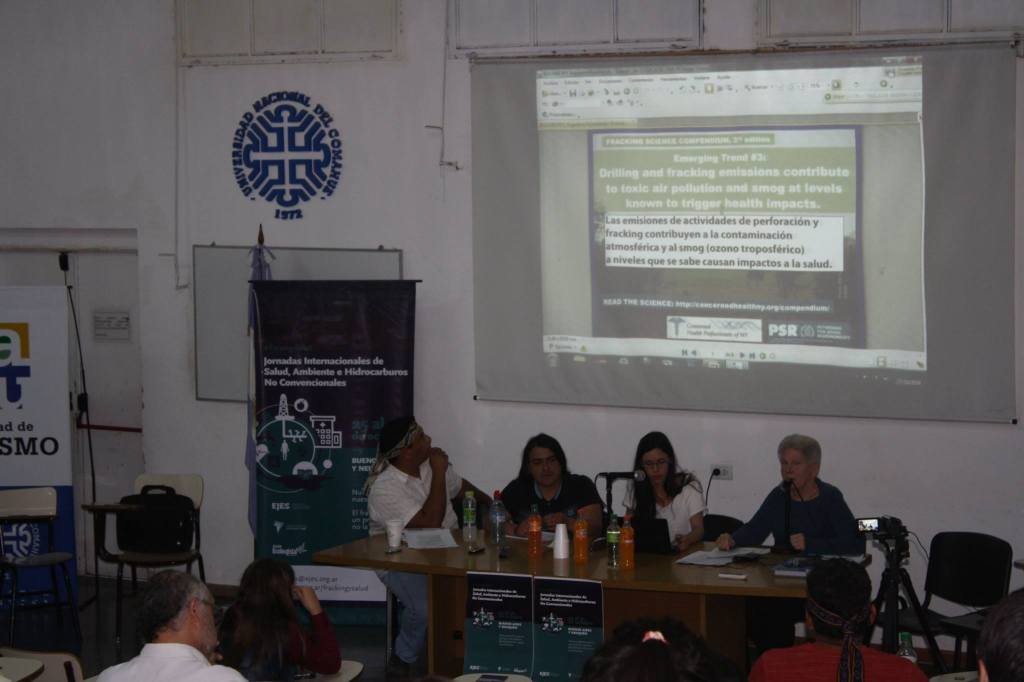
But to go back to the focus of these reflections, and because of the proliferation of translation research on this ‘hot’ topic (sad pun intended), let’s remember that words have a genealogy; some might be used by certain power groups, and we may decide not to reproduce them in our language. This can be a decision taken together with those who commissioned the translation but are unaware of the history of a concept or even of a whole sector in the source culture. We can advise them. An example: if you are working with a grassroots climate organization from Latin America, they might choose not to use certain concepts or expressions of the mainstream environmental sector in the US. Ask yourself why and how concepts such as ‘sustainability’, ‘resilience’ or ‘Anthropocene’1 became so widespread globally. What is their history? Who do they represent? Which sectors are more likely to use them? Are they in line with our values?2 Not only Translation Studies researchers, but also practicing translators, ask these and other questions. As for the latter, only when you know about such debates can you advise your client/collaborator so that they can make an informed decision.
It might seem obvious, but researchers working on issues like translation and climate also need to become aware of the dominant discourse and the main debates in the field, even if they are “only” asking questions to understand a given process. The widespread presence—and the urgency—of the problem does not discharge us from this responsibility, quite the contrary. What discourse am I disseminating? What are the implications? These are matters on which the researcher may have more freedom than the translator, but neither can detect what they ignore. In times of multiple crises, we know that international «solidarity is key in climate justice»,3 and translation has a big role to play, one in which the lack of critical thinking is not a luxury we can afford, particularly in territories of the Global South under state and corporate-initiated environmental conflict.
*Technical & scientific translator (EN-SP), member of Territorio de Ideas, doctoral student in Socioloy at SUNY Binghamton’. Latest publication (in Spanish): https://ojs.uv.es/index.php/kamchatka/article/view/24479/21590
1 For an introductory article on the Anthropocene vs. Capitalocene, see Moore, J. Unthinking the Antropocene: Man and Nature in the Capitalocene. Global Dialogue. Magazine of the International Sociological Association. (November 2021). https://globaldialogue.isa-sociology.org/articles/unthinking-the-anthropocene-man-and-nature-in-the-capitalocene
2 For a great analysis related to political discourse in media, particularly how left-wing outlets can reproduce the rhetoric of the right and mainstream institutions, see Baker, M. Rehumanizing the migrant: the translated past as a resource for refashioning the contemporary discourse of the (radical) left. Palgrave Commun 6, 12 (2020). https://doi.org/10.1057/s41599-019-0386-7
 Territorio de ideas